PIPL

PIPL

Tuesday, March 30, 2021

Piping Plover Territories

Here is a male Piping Plover chasing after another that was in its territory on one of our beaches today. 

We are seeing more territories being formed each day while new birds are still arriving. Some are passing through on their way north, and others are here to find their own mate and place on our shores. It will not be long before we have our first nests of 2021 as our staff continues to find more nesting scrapes every day. We cannot wait to have our volunteer monitors join us in the field soon.

Scott Kruitbosch
AAfCW Volunteer Coordinator

Friday, March 26, 2021

Pairs and Territories

Our American Oystercatchers and Piping Plovers are beginning to form pairs and create territories as we move towards the end of March. These birds have been returning to the state over the past few weeks, and in some cases, our more significant sites now have the beginnings of the nesting season.

Keep in mind that more individuals of these species will be returning to Connecticut over the next several weeks. We should anticipate finding more Piping Plovers and American Oystercatchers at our beaches even into May. We will begin to see nests in April, with first attempts occurring even throughout May. Any re-nesting due to losses from predators, abandonment from human disturbances, tidal washouts, or severe weather can stretch into early summer. It will be a busy few months to come for all of us.

Scott Kruitbosch
AAfCW Volunteer Coordinator

Thursday, March 25, 2021

Data Entry & Monitoring 2021

Thank you to everyone who has submitted their mailing address information, desired monitoring location(s) and schedule, signed monitoring form, and vehicle information, if applicable. We are now finishing these tasks as we begin the official monitoring season in April. Please submit all information by this weekend at the latest.

We are hopeful new monitor field training will occur next month, details TBD. Please continue to review the Zoom training sessions on YouTube or let us know if you have any more specific questions about being in the field.


Keep in mind we want to be monitors conducting surveys while transiting our beaches. Some locations, like Bluff Point, may take hours to fully cover, while others, like Short Beach, may take only 20 minutes. We do not want to be positioned on the beach in a way to add to the disturbances. 

We monitor by walking along the waterline, scanning the beach and nesting areas from afar, and continuing to move. Sitting down in the middle of nesting areas or lingering in and around our birds can be problematic. They do not realize we are trying to help, and instead see us as disturbances or potential predators. This can discourage nesting attempts, keep pairs off eggs, stress young, and so forth. If you want to remain at a location for a prolonged period, you should do so while at the beginning of a beach, at the end of the parking area, etc. far removed from nesting habitat, using binoculars and spotting scopes.

Please enter your data and information as soon as possible after monitoring. This blog has a link in the right-hand column under "Important Documents" to the "Online Data Submission Form" which you should review and use for data entry. It will prompt you to input all of the information we require, and you can add comments for more details as well. If you do not see any of our target species (Piping Plover, American Oystercatcher, and starting in May, Least Tern and Common Tern) please submit data regardless. Your trip information, hours, lack of birds, disturbances, observations of weather or people - all of that is vital to know.

Thank you!
Scott Kruitbosch
AAfCW Volunteer Coordinator

Tuesday, March 23, 2021

Piping Plover Lunch

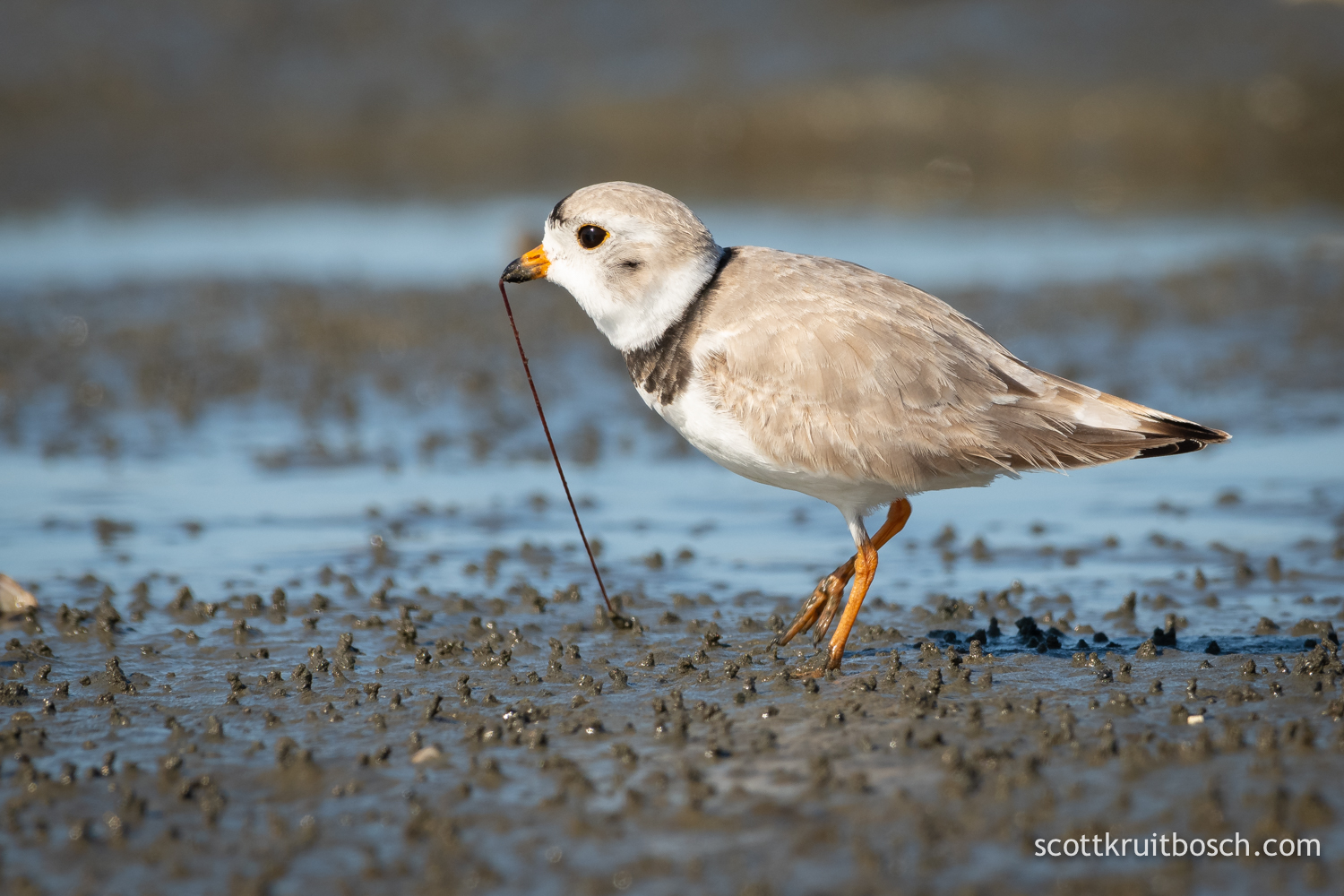
Beautiful spring weather has arrived in Connecticut! Piping Plovers continue to show up on our shoreline, too. This bird, probably a male, was photographed yesterday while having a long lunch in the marsh.


March is a good month to get a look at our shorebirds without disturbing them too much. We want to see activity like continued foraging when we are on the beach. It lets us know the birds are not bothered by our presence, and they feel comfortable with us at a safe distance. The more birds ignore you, the better job you are doing at protecting them.

Scott Kruitbosch
AAfCW Volunteer Coordinator

Thursday, March 18, 2021

The Importance of Negative Data

We ask all of our AAfCW volunteer monitors to submit data and information via our electronic form as soon as possible after all beach surveys. Even trips without seeing any Piping Plovers, American Oystercatchers, Least Terns or Common Terns mean we still need that “negative data”. Information about a lack of birds is just as important as an abundance of birds.

Negative data lets us know monitors were there on the beach at the scheduled time and that birds were simply not there, instead of us thinking they may have had to skip monitoring that day, leaving staff wondering what was or was not present. We can still learn about any disturbances, predators, and human activities on the beach even if there are no birds to report. We can then actively target our field staff to sites more appropriately with a more complete picture of what is or is not going on.

Please remember this throughout the season and send us a report each time after you monitor. While we would much rather read a wonderful account of so many of our species being recorded by all of you, we still need to receive monitoring data even when no birds are found whatsoever. That negative data goes a long way in helping us understand, protect and steward Connecticut's coastal waterbirds.